
A practical playbook for businesses to decide which agents to build vs. buy—hit outcomes faster, stay swap-ready, and avoid lock-in.
TL;DR
Build what sets you apart.
Buy what scales.
Use the scorecard below to choose, prove it with clear metrics over the next year, and keep your stack “swap-ready” with open protocols so you can change vendors without rewiring.
Some work makes your business different in the eyes of customers. That’s core. The rest is context—table stakes you must do well but won’t win on.
“Companies bring in ‘core’ functions that differentiate them… and outsource the ‘context’ that’s table stakes to get right.” — Aaron Levie, CEO Box.
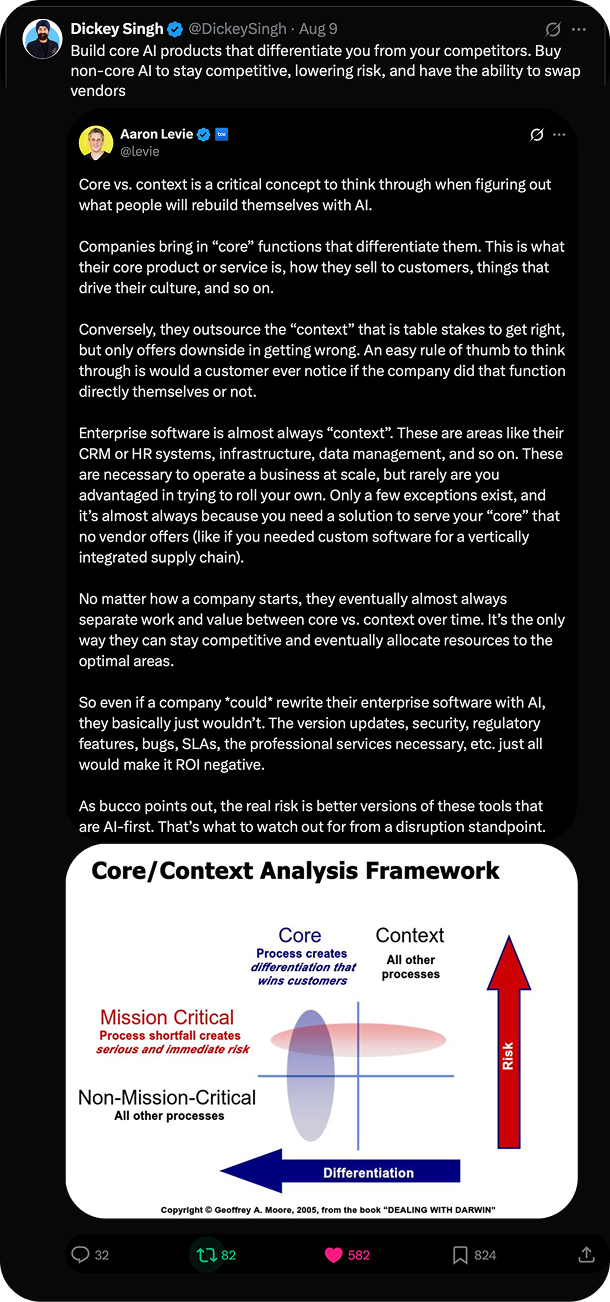
In practice, the durable pattern is a capable front-of-house agent that steers conversations, with smaller task agents behind it. Don’t rebuild parity. Build core. Buy coverage.
Also check article: Stop Calling it Context Engineering
If customers would notice—and it moves a top metric this year—lean to build.
If it’s about reach, speed, or standard operations—lean to buy.
This is a business decision, not the CX or Sales department call. Leadership, CX, product/engineering, ops, security, and finance should make it together.
Guardrails either way (put these in the contract):
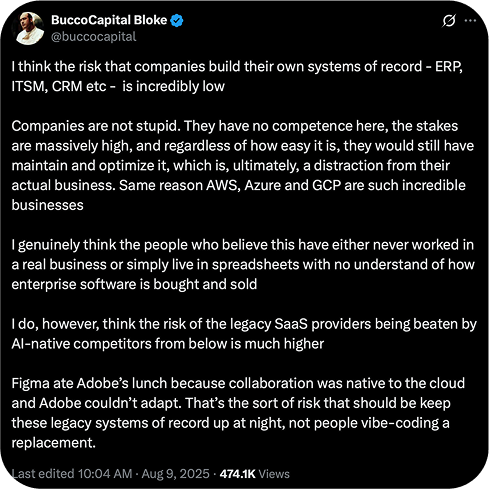
“The risk that companies rebuild their systems of record is low… The real risk is better, AI-first versions beating legacy SaaS.” — Bucco Capital
Price the total cost to own and run over 12–24 months, not just the next sprint.
If you are operations-heavy, start by buying and configure with your data and policies.
Graduate to build only when customers would notice, you have a data advantage, and the scale or risk clearly justifies owning it.
You can also take a middle path: add small tools around a bought agent for your unique steps, and keep human approvals in the loop where needed.
Cast Example
On the left and right are vendor-supplied agents that give you reach—customer presentations, Q&A, feedback, readiness, and internal briefs. In the center are the agents you build: the pricing, risk, planning, or savings logic that make you different. All agents interoperate over standard protocols (A2A/ACP/MCP with human approvals), so you stay swap-ready.
Build in the middle, buy at the edges—connect everything over open protocols.
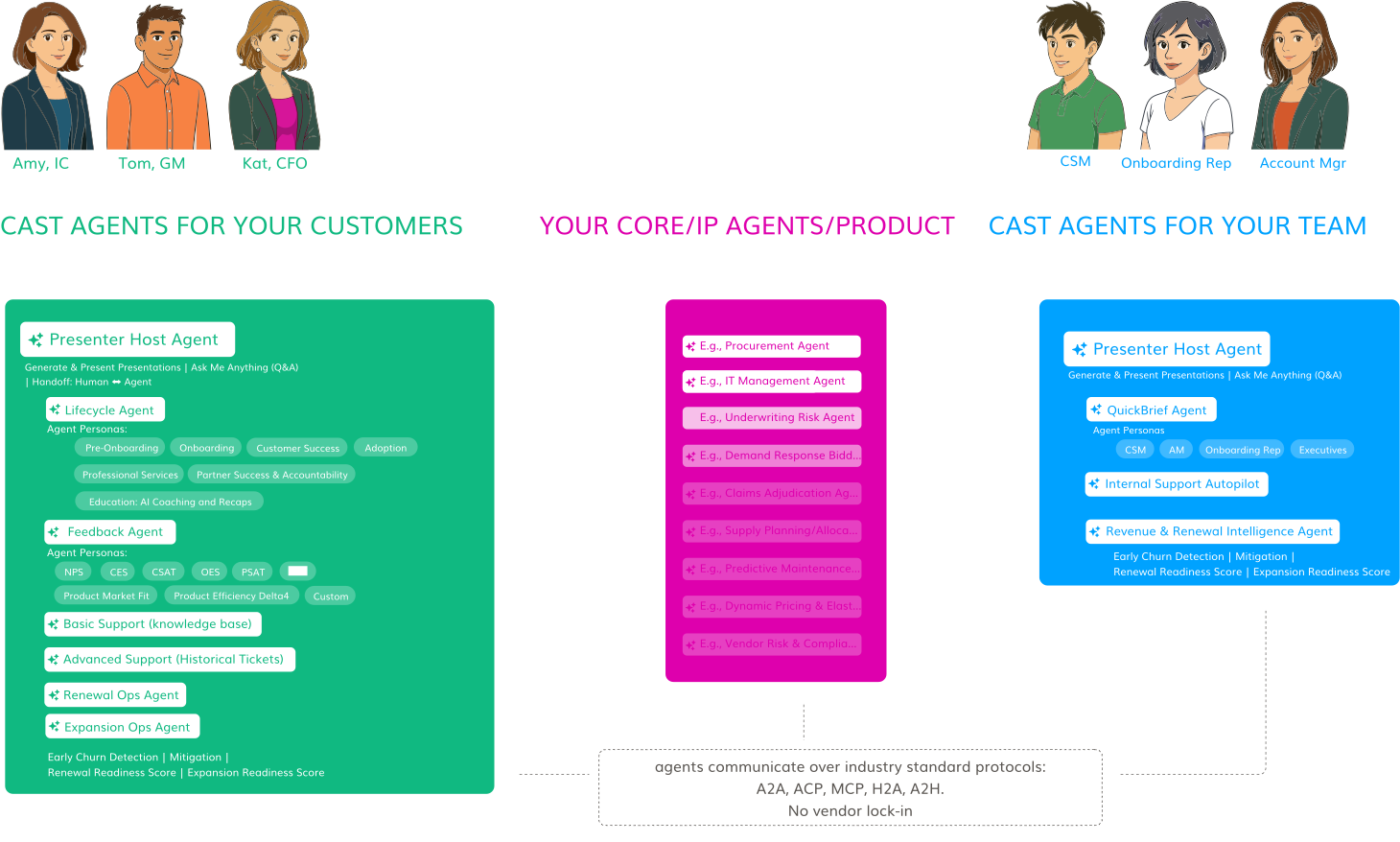
Whatever you choose, favor open protocols and interfaces—so agents can hand off work to each other, follow policy, reach data and tools safely, and escalate to people when needed. This keeps you able to swap parts without ripping out everything around them.
Track before/after for one year. Let numbers—not opinions—settle the debate.
Build your core. Buy your coverage.
Use the scorecard. Put the guardrails in your contracts. Choose standards that make change easy. That’s how you move fast—and stay free.